
Revolutionize Your Designs with CFD Analysis Services

When it comes to designing innovative products or optimizing industrial processes, understanding fluid behavior is crucial. That’s where CFD analysis services come into play. Computational Fluid Dynamics (CFD) allows engineers and designers to simulate fluid flow, heat transfer, and related phenomena in a virtual environment. This technology has transformed how businesses approach design challenges, enabling faster, more accurate, and cost-effective solutions.
In this post, I’ll walk you through how CFD insights can revolutionize your designs, the benefits of using CFD analysis services, and practical tips to get started. Whether you’re developing a new mechanical component or improving an industrial system, embracing CFD can give you a competitive edge.
Unlocking the Power of CFD Analysis Services
CFD analysis services provide detailed simulations of fluid flow and thermal effects within your design. This means you can visualize how air, water, or other fluids interact with your product before building a physical prototype. The advantages are clear:
Reduced development time: Identify design flaws early and iterate quickly.
Cost savings: Minimize expensive physical testing and material waste.
Improved performance: Optimize fluid dynamics for efficiency, safety, and durability.
Enhanced innovation: Explore complex scenarios that are difficult to test physically.
For example, imagine designing a cooling system for an industrial machine. Using CFD, you can simulate airflow patterns and temperature distribution to ensure optimal heat dissipation. This insight helps you tweak fan placement, duct shapes, or materials to achieve the best results without guesswork.

CFD analysis services are not just for large corporations. Small and medium-sized businesses can also benefit by partnering with experts who provide tailored simulations and actionable recommendations. This collaboration can accelerate product development and improve operational efficiency.
Is CFD difficult?
Many people wonder if CFD is too complex to integrate into their design process. The truth is, while CFD involves advanced mathematics and physics, you don’t need to be an expert to leverage its benefits. Here’s why:
User-friendly software: Modern CFD tools come with intuitive interfaces and automated workflows.
Expert support: Working with a computational fluid dynamics consulting firm means you get professional guidance every step of the way.
Scalable solutions: You can start with simple simulations and gradually explore more complex analyses as your needs grow.
That said, understanding the basics of fluid dynamics and simulation principles helps you communicate effectively with consultants and interpret results accurately. It’s a worthwhile investment that pays off in better design decisions.
For instance, knowing how turbulence affects flow or how boundary layers form can clarify why certain design changes improve performance. This knowledge bridges the gap between raw simulation data and practical engineering insights.
Practical Applications of CFD in Mechanical and Industrial Engineering
CFD analysis services have a wide range of applications across mechanical and industrial engineering fields. Here are some common examples where CFD insights make a significant impact:
HVAC system design: Simulate airflow and temperature distribution to optimize heating, ventilation, and air conditioning systems for comfort and energy efficiency.
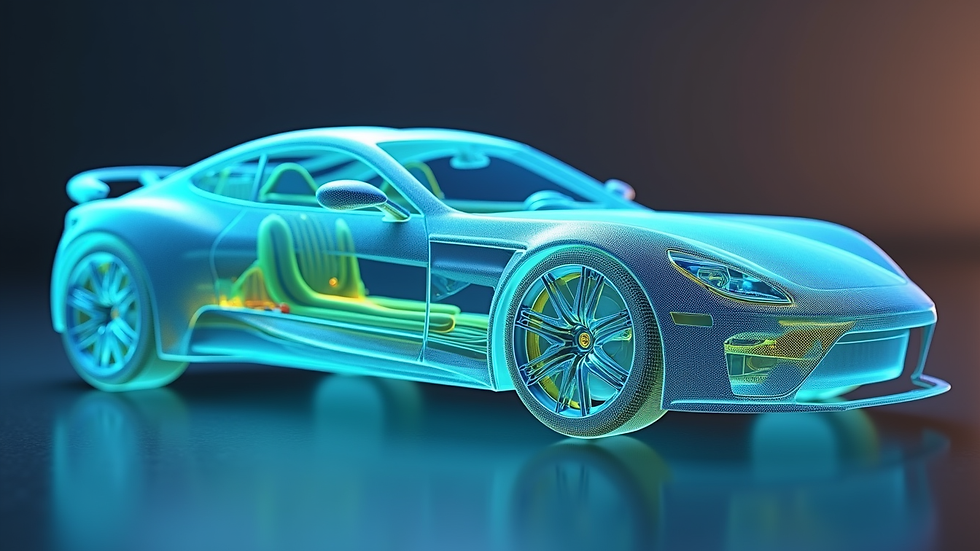
Automotive engineering: Analyze aerodynamics to reduce drag, improve fuel efficiency, and enhance vehicle stability.
Process engineering: Model fluid flow in pipes, reactors, and mixers to improve chemical processing and reduce downtime.
Thermal management: Design cooling solutions for electronics, engines, and industrial equipment to prevent overheating.
Environmental engineering: Predict pollutant dispersion and airflow in urban planning or industrial sites to meet regulatory standards.
Each of these applications benefits from the ability to test multiple design scenarios virtually, saving time and resources. For example, in automotive design, CFD can simulate wind tunnel conditions without the need for costly physical models, allowing engineers to refine shapes and features rapidly.
How to Integrate CFD into Your Design Workflow
If you’re ready to harness the power of CFD analysis services, here are some actionable steps to get started:
Define your objectives: Clearly outline what you want to achieve with CFD, such as improving airflow, reducing pressure drop, or enhancing heat transfer.
Gather design data: Provide accurate CAD models, material properties, and operating conditions to ensure realistic simulations.
Choose the right partner: Collaborate with a trusted computational fluid dynamics consulting firm that understands your industry and goals.
Review and interpret results: Work closely with experts to analyze simulation outputs and identify design improvements.
Iterate and optimize: Use CFD insights to refine your design, then validate with physical testing if needed.
Remember, CFD is a tool to complement—not replace—traditional engineering methods. Combining simulation with hands-on experience leads to the best outcomes.
The Future of Design with CFD Insights
As technology advances, CFD analysis services continue to evolve, offering even more powerful capabilities. Artificial intelligence and machine learning are being integrated to automate simulation setup and optimize designs faster. Cloud computing enables access to high-performance simulations without heavy local hardware investments.
For businesses focused on mechanical and industrial engineering, staying ahead means embracing these innovations. CFD insights will play a central role in developing smarter, more efficient products and processes.
By partnering with computational fluid dynamics experts, you can unlock new possibilities and transform your design approach. The result? Products that perform better, cost less to develop, and meet market demands with confidence.
Embracing CFD analysis services is not just a technical upgrade—it’s a strategic move that revolutionizes how designs come to life. With the right knowledge, tools, and partnerships, you can turn complex fluid dynamics challenges into opportunities for innovation and growth.


Comments